#16: A Case Study for Integrating Sustainable Practices
“Embracing an integrated perspective, which would allow us to develop strategies that strengthen our organizations and communities and foster positive change, doesn’t always come naturally or easily. It’s a skill that takes time to practice and develop. It requires intentionality.”
RESOURCE RECOMMENDATION:
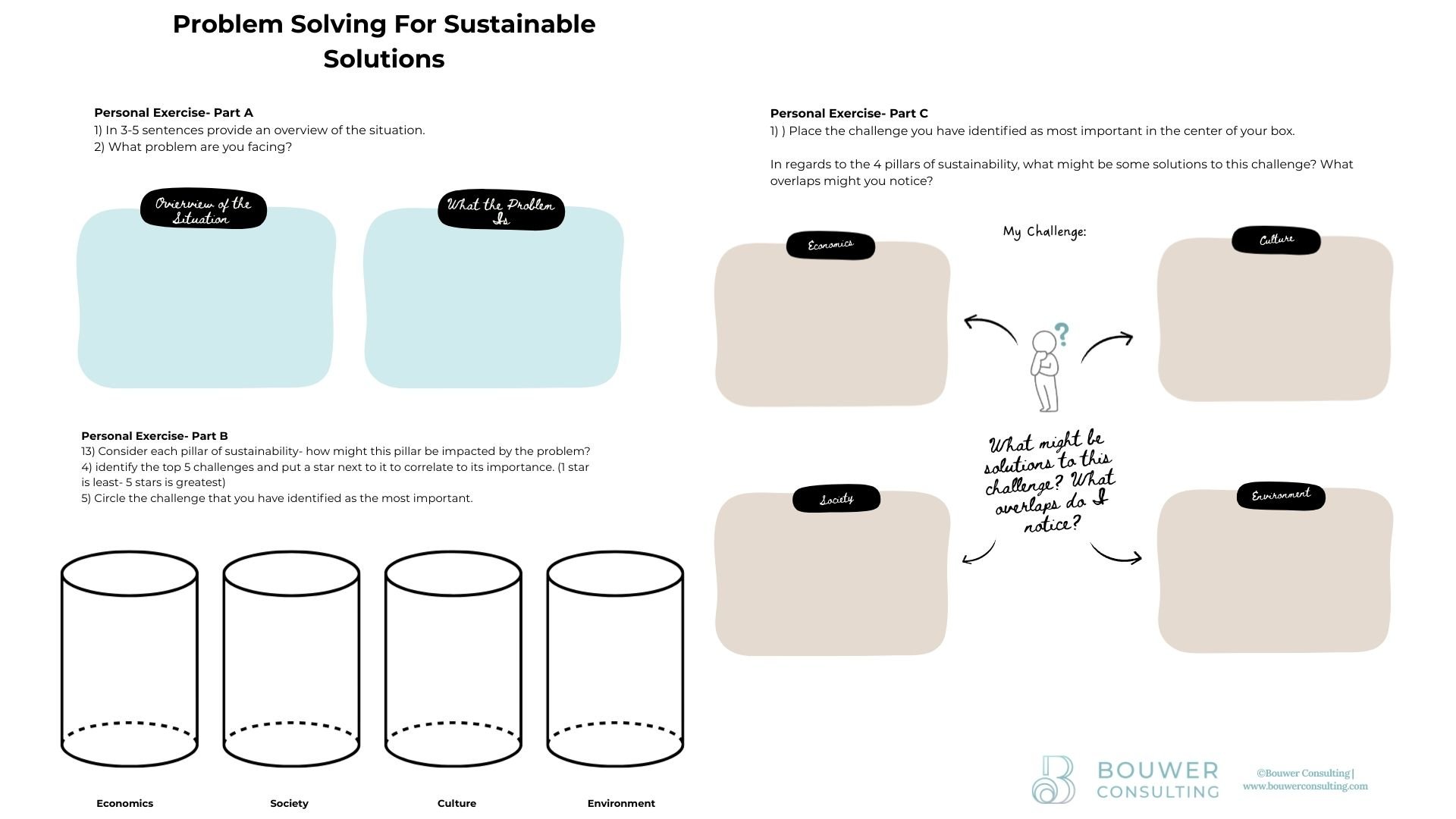
Download our Free PDF: Problem Solving for Sustainable Solutions
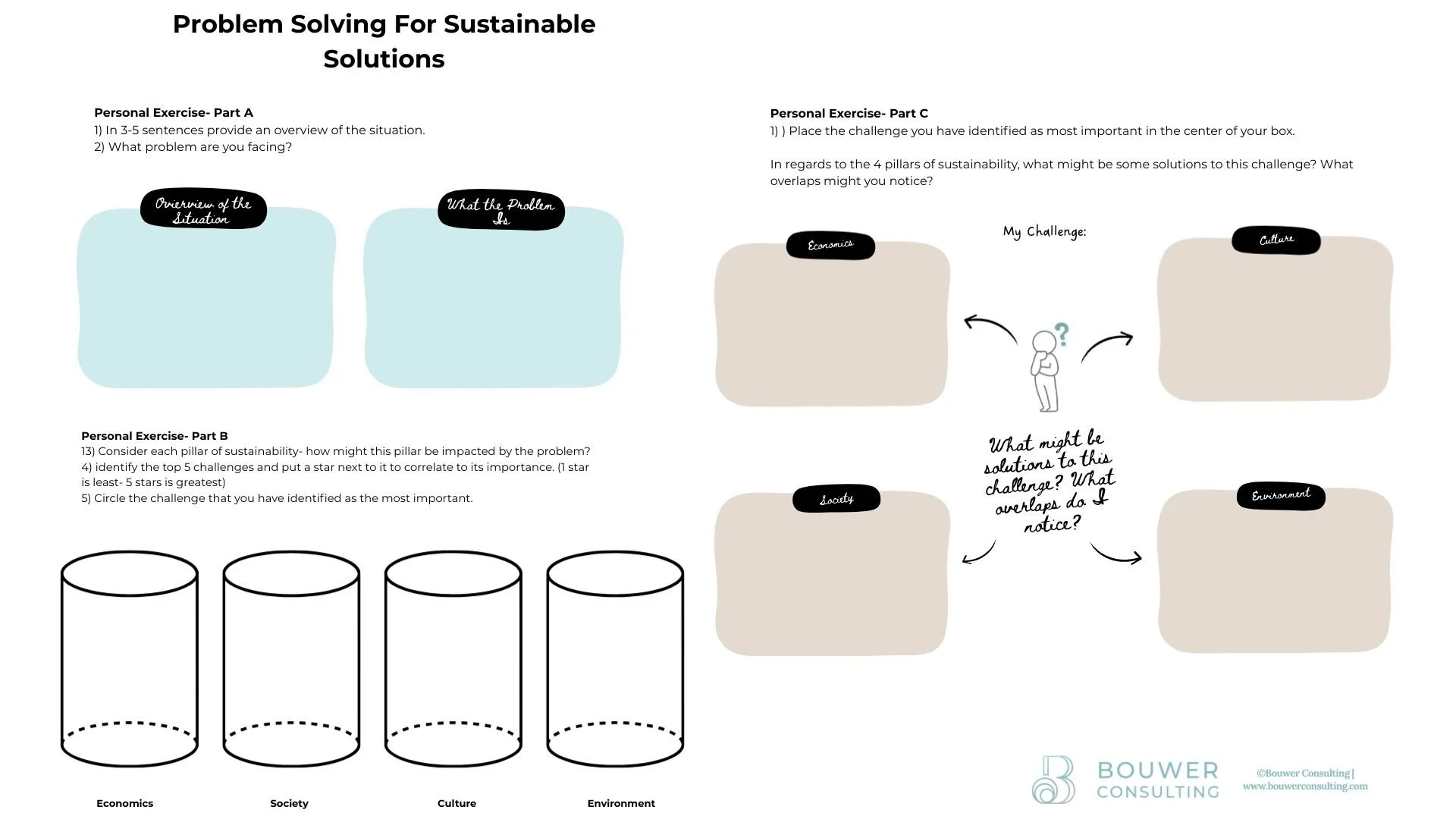
Synopsis: Using the example scenario provided in this post as a model, individuals are able to work through their own challenges as they consider how the pillars of sustainability connect, both in the challenge they face, and the solution they are seeking.
As NPOs and educational institutions, we have a great opportunity to lead the discussion on sustainability by understanding and modeling how the different pillars—economics, society, and the environment—are connected.
In education, we have the opportunity to develop students’ critical thinking and begin to guide them in their analytical skills. By teaching them to view the challenges we face through a multi-dimensional lens, they become adapt at considering the interconnectedness between different pillars.
In the nonprofit sector, limited resources are often seen as a challenge to overcome. This is not necessarily a negative challenge; instead it presents a unique opportunity to think creatively and innovate solutions. Rather than viewing constraints as drawbacks, we can leverage them to rethink our strategies and approaches. This approach helps us foster resilience, strengthen our communities, and encourages adaptability in our efforts to create meaningful impact and drive positive change.

Sustainable Practices for Capacity Building
“What might sustainable practices look like in practice when we consider the pillar of ‘society’ in relation to capacity building?
How might it connect to the pillar of ‘economics’ so that they work in tandem instead of competing with one another for resources?”
Oftentimes organizations, schools and even teams feel like they have competing challenges vying for limited resources. As a result, they begin to become entrenched in one perspective. Using graphic organizers is one way to help filter and determine the main challenge groups are seeking to resolve. As teams drill down and identify common ground, the conversations often move away from an individual, “I need” to a collective, “We need” as sustainable solutions are considered.
In courses I have taught and organizations I have worked with, I often use example scenarios to help teams begin conversations and generate ideas around what sustainable actions might look like in coordination with the different pillars. By doing a sample together, it breaks the ice and helps them ‘practice’ before jumping into their own situation.
So how might these pillars- economics, society, culture, environment- work together in tandem to help develop potential sustainable solutions for a problem an organization faces?
I invite you to download the free PDF and follow along with the sample scenario to try out one of my favorite analytical exercises: “Problem Solving for Sustainable Solutions”.
Scenario: Unleashing Potential
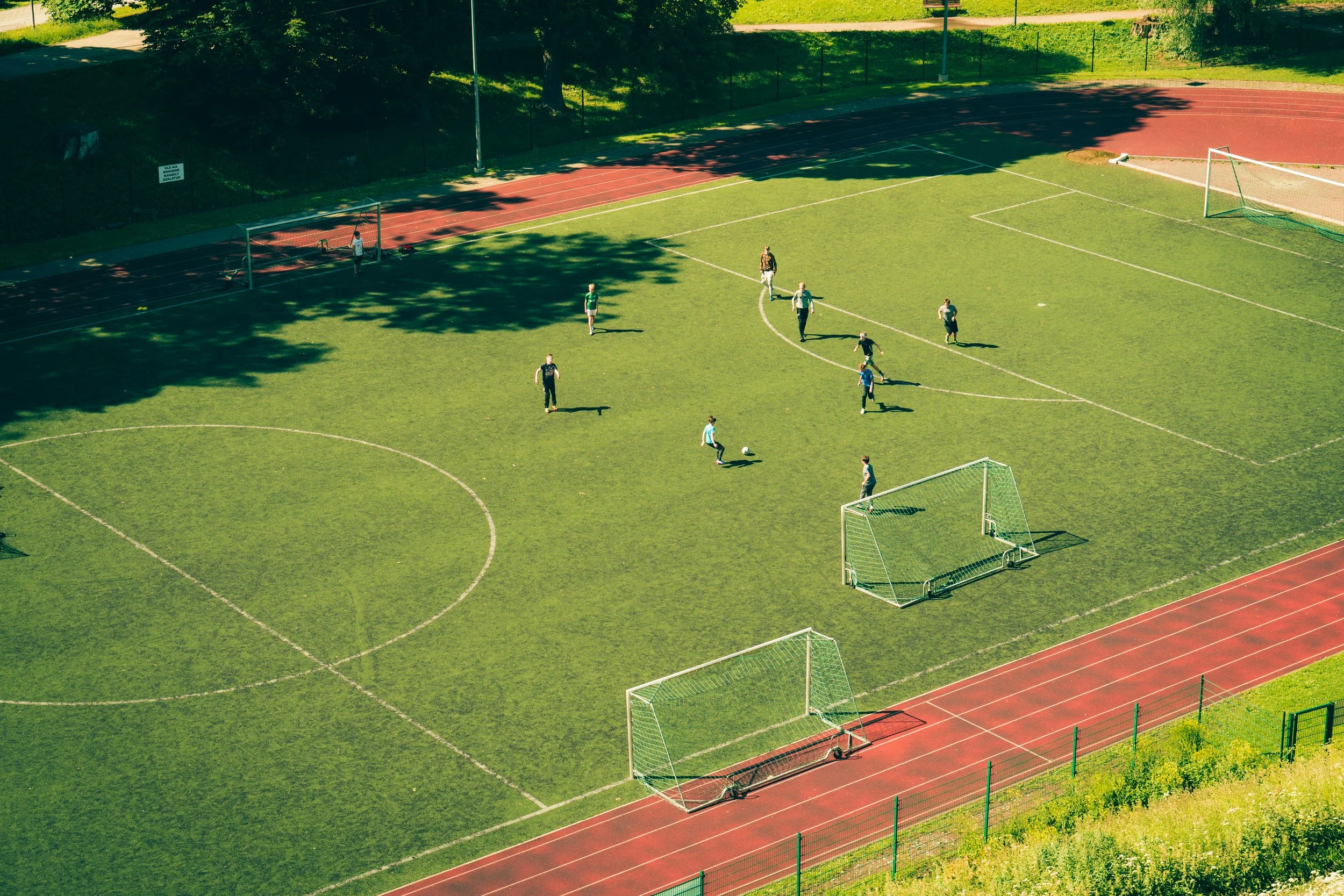
Overview: Organization A’s focus is on providing sporting opportunities for low income areas as a way to develop the local youth. By creating opportunities for coaching programs and sports, the youth in the local neighborhoods would be able to grow in both talent and life skills. Additionally, there is a desire that by providing proper sports training, opportunities may arise for untapped talent to be seen for local and regional sports teams. Originally, started as a philanthropy project, they now predominately rely on grants for funding which can often be inconsistent.
Challenge: Organization A received a large grant for building a state of the art sports field within the local neighborhood. After it was built, it is considered the best sports field in the city. The area that the sports field is built in is safe. However, the surrounding neighborhood does have high poverty and struggles with many social issues. Due to the neighborhood’s reputation, the broader, local community outside of the immediate neighborhood is not interested in supporting Organization A or playing against the local neighborhood sports teams. Rather, the challenges that this community faces is often seen as an ‘other’ problem. With limited grants for sports programs available, Organization A has begun to move away from their stated mission focus and offer alternative programs based on whatever grants they are able to receive. As a result, there is a lack of clarity for what they stand for.
Potential Ways Society & Economic Pillars Work Together
1) Create opportunities for Collaborative Coaching Professional Development within the broader community: Professional development/ training is offered for the dedicated coaches that are working within Organization A’s program. By opening trainings and PD opportunities up to local coaches who are from schools within the broader community, outreach can begin to occur. Organization A moves away from being faceless with few connections or relationships to the broader community. Purposeful engagement begins which moves individuals who may have been standing on opposite ends of a line, closer together. Additionally, by offering collaborative PD opportunities to coaches from schools within the broader community for a fee, an alternative funding stream is being produced.

#16:
A Case Study for Integrating Sustainable Practices
2) Developing Coaching Courses: Organization A has sports credibility due to a large philanthropic donor who provided initial seed funding and training of the first generation of coaches. Utilizing this credibility, coaching courses could be created and then sold to community centers, schools that are interested in starting a new sports program, after-school programs, etc. Additionally, they could also offer programs such as “Train the Trainers” in which their coaches are able to train additional coaches as a way to generate additional program revenue.
Not only would these courses provide an alternative funding stream for the organization, it would also connect individuals within the community with job opportunities, promoting economic empowerment as a potential career pathway in the sports industry.
3) Engaging with local teams: As part of Organization A’s vision to build visibility for untapped talent providing opportunities for the local neighborhood teams to partner with local university and corporate sponsored teams. From sponsored fundraisers, local businesses 'adopting’ Organization A’s neighborhood teams, to playing games against one another on the new sports field, there are many ways that the stigma of the neighborhood’s reputation can be countered, while encouraging a sense of safety in coming to play local games on the newly built field. Since local university/ corporate teams are seen as ‘trusted’ sources, as Organization A partners with them, the broader local community begins to develop trust; over time the stigma surrounding the community that Organization A is working with begins to be countered.
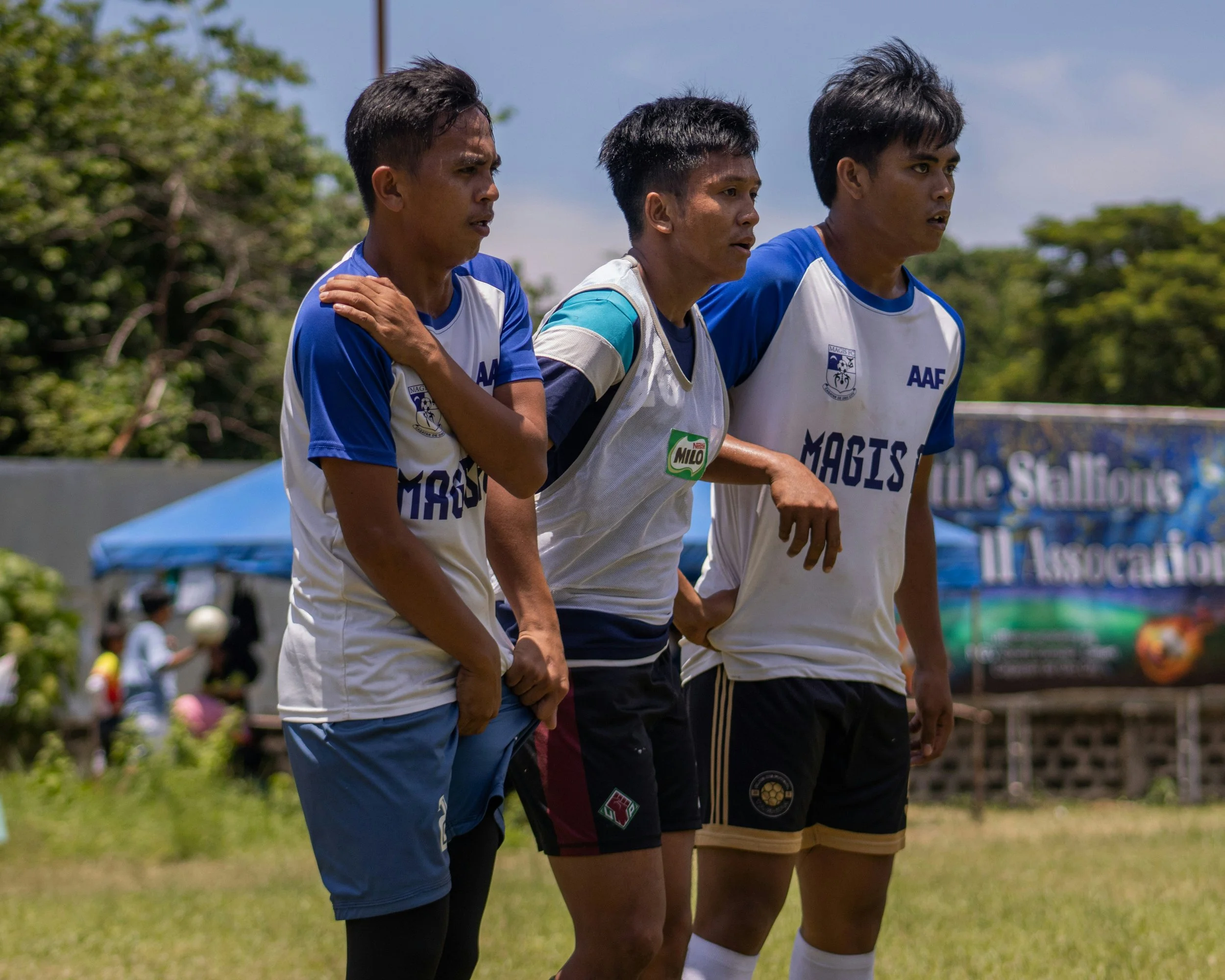
4) Mentoring Programs: One of this project's goals is to scout for untapped talent. Encouraging opportunities for mentoring with local university/divisional/ provincial teams, not only creates awareness about Organization A for the broader community, but also taps into the credibility that they offer. By offering opportunities for mentorship with these teams and professional players, not only is skill development enhanced, but mentorship is proven to boost self-confidence and self-esteem, while at the same time cultivating personal development in areas such as goal setting and time management. Furthermore, encouraging and building opportunities to connect to the surrounding community, stronger social connections and support are being made which provides a greater sense of belonging.
5) Cultivating Ambassador Programs in High School: As coaches from the broader community have opportunities to interact with the coaches from Organization A, trust is built which then transfers to the teams that they lead. This trust can lead to engagement and potential opportunities for teams to begin to play against one another in both ‘home’ and ‘away’ games.
Additionally, for many high schools, ambassador programs are opportunities for student leaders to get involved within the local communities in a variety of ways such as peer mentoring, fundraising, community service, etc. By working with and creating opportunities for peers from Organization A’s program and other schools to come together for a shared purpose, it removes the ‘other’ label and replaces it with ‘together’.
Final Thoughts…
Embracing an integrated perspective, which would allow us to develop strategies that strengthen our organizations and communities and foster positive change, doesn’t always come naturally or easily.
It’s a skill that takes time to practice and develop. It requires intentionality.
As educators and NPO practitioners, adopting a holistic approach in program development, curriculum design, and organizational structures enables us to identify effective solutions that address immediate challenges and promote long-term sustainability. This skill, while not inherently simple, is vital for driving impactful change in the communities around us.
If your organization is looking for ways to create sustainable solutions for programs and funding, we’d love to connect and explore how we can assist you.
