#18: Decoding Complexity: How Systems Thinking Transforms Our Approach to Challenges
“How we define our problem often determines the type of thinking we use to approach the situation we are facing.”
RESOURCE RECOMMENDATION:
Click below for our Free PDFs “Categorizing Types of Problems” and “Linear vs Systems Thinking”
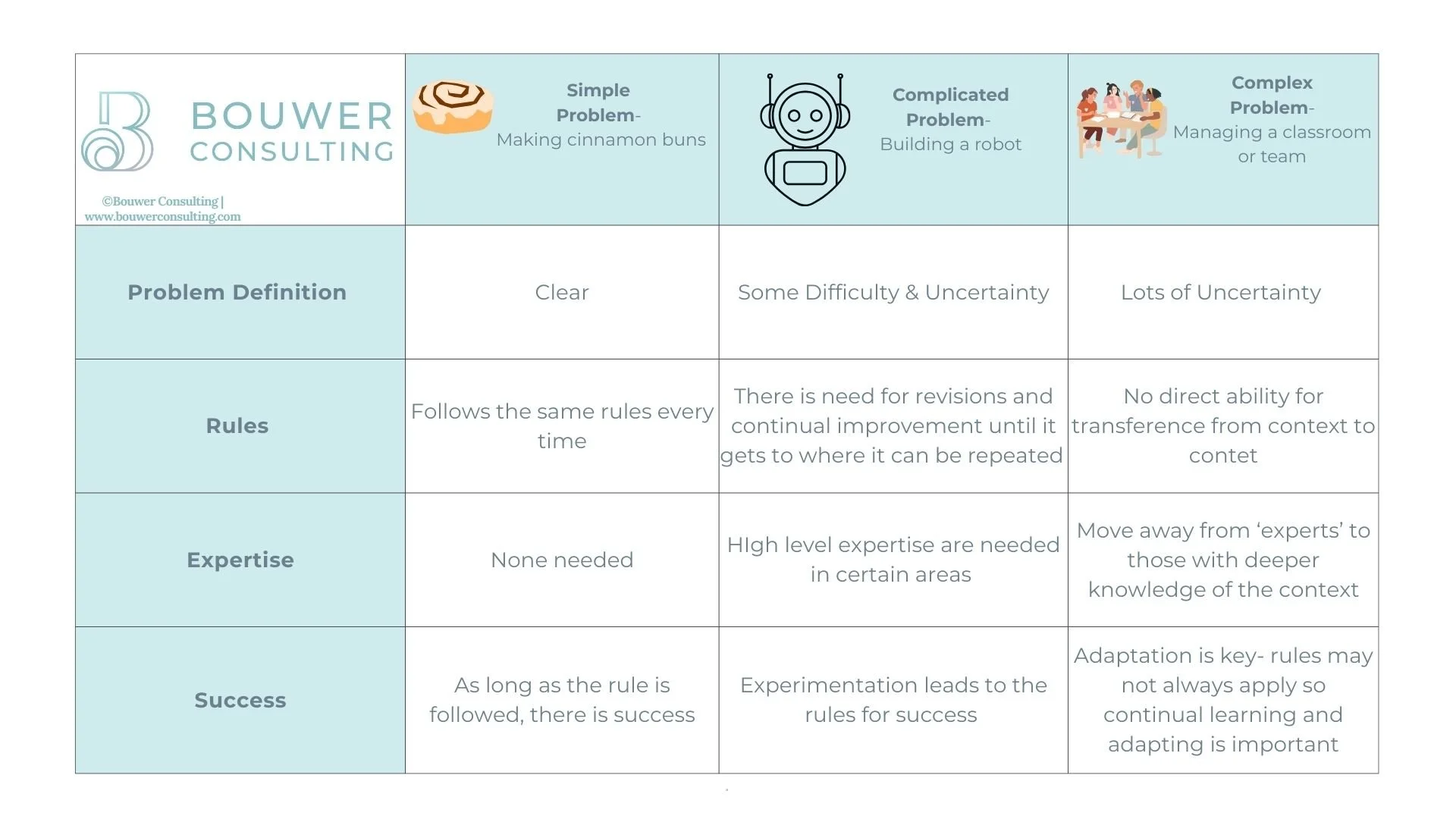
Categorizing Types of Problems
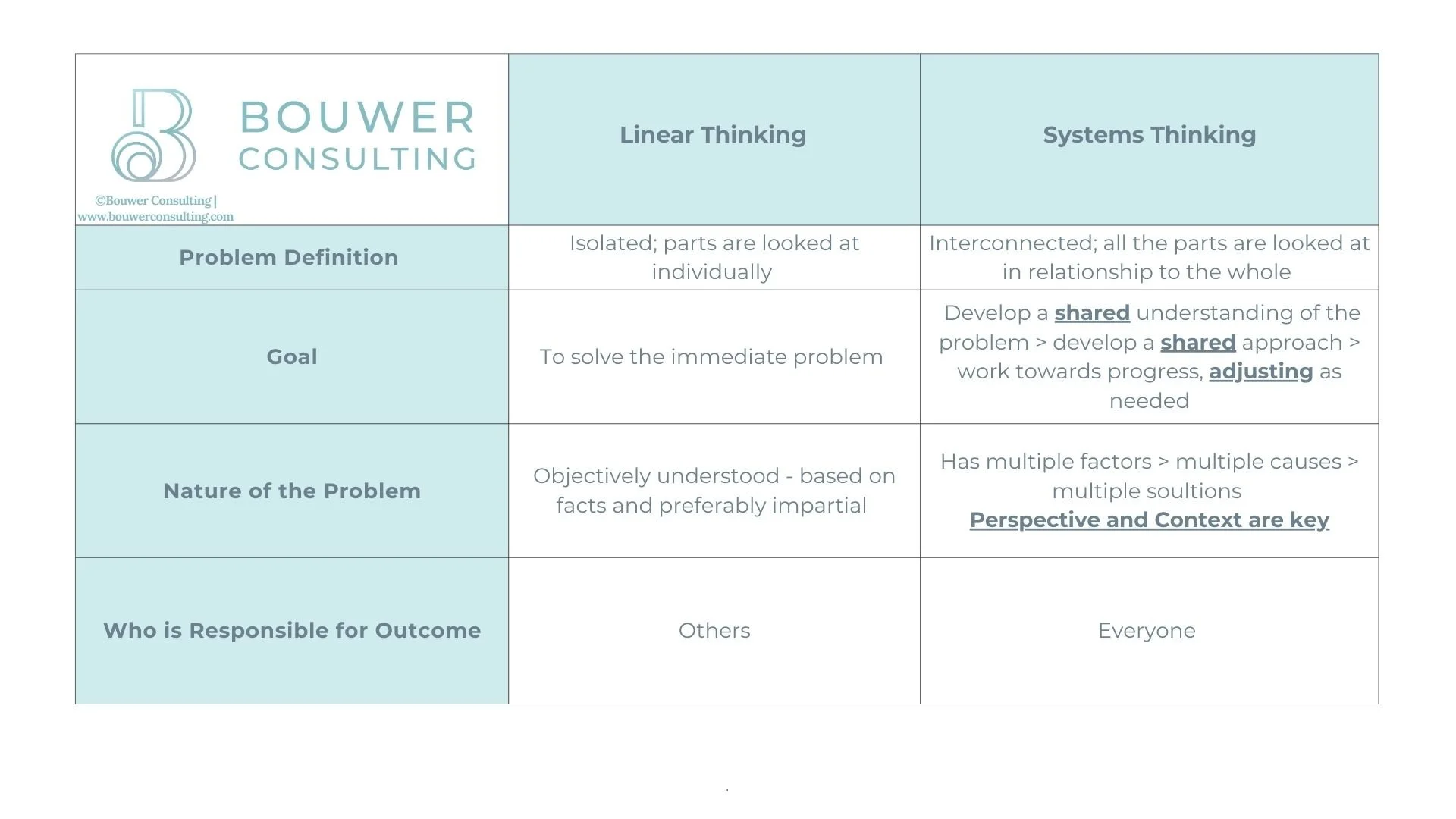
Linear Thinking vs Systems Thinking
At the start of the year, I had the opportunity to visit a friend who I hadn’t seen in over a year. While visiting, she made the most amazing cinnamon buns and I knew that it would be a recipe I would love to take home and try out. During Chinese New Year, our city is quiet as it empties out and everyone returns to their hometown - I knew this would be a perfect time to try out this new recipe.
Ironically, I live in a city that has over 8,000 coffee shops and a bakery on just about every corner so I don’t do a lot of baking. Yet, I remember a time when I first moved to this city, over a decade ago, where there were few bakeries selling western style pastries or breads and baked goods were a specialty. As there was a serious lack in the market then, one entrepreneurial spirit decided to buy a push cart and stocked it full of homemade cookies that she baked on the weekend from her kitchen. Pushing this cart down popular areas she knew many foreigners would tend to congregate around, she sold homemade jams and cookies and built a thriving cookie business that everyone in the city still knows today.

As I pulled out ingredients from my own cabinet, I began to think about how we approach problems we may come across and what drives long term success.
The Difference Between Complicated vs Complex Problems
When I think about complicated and complex problems, I find that these words are often used interchangeably. However, there is a difference between these terms and I would suggest that it centers around the type of thinking we use to approach these situations.
As shared in the previous blog post, “Transforming Your Perspective: From Linear to Systems Thinking”, there is a distinct difference between linear vs systems thinking. Most organizations and teams tend to default to linear thinking because we often think in cause> effect relationships. But what happens when the situation or problem is not so tidy and cannot be simplified and neatly fit into a box?
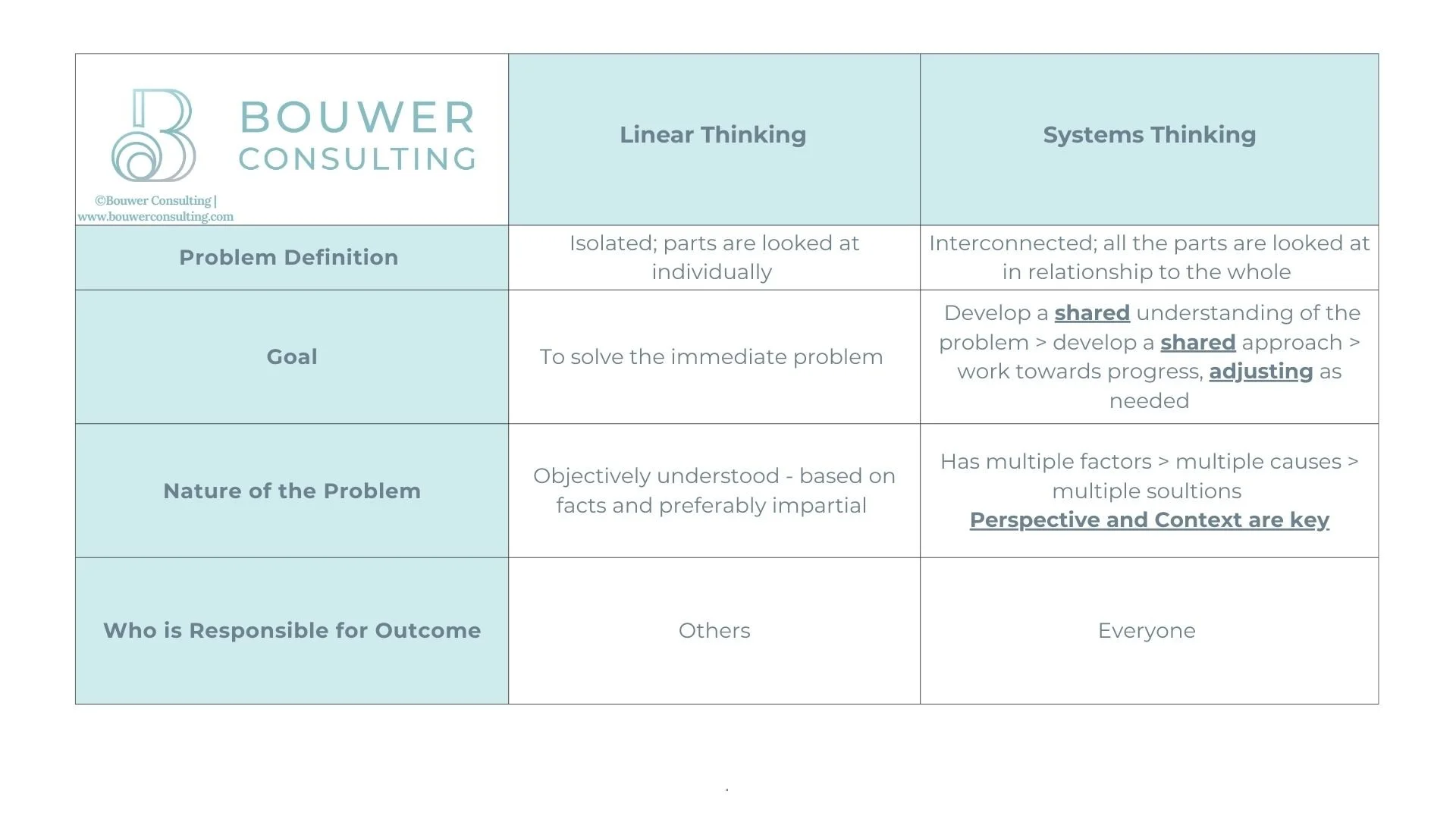
Linear Thinking vs Systems Thinking
How Do Problems Define Our Thinking Style?
The different types of problems organizations and teams face can often be placed into one of 3 categories: Simple, Complicated, Complex. How we categorize the problem often depends on several factors:
how we define a problem
the rules we apply to the problem
the type of ‘expertise’ that may be needed
and how success is created
These factors often influence the type of thinking we use to solve the situation we are confronted with.
Simple Problem: Baking Cinnamon Buns

#18:
Decoding Complexity: How Systems Thinking Transforms Our Approach to Challenges
Returning to my CNY baking, the problem was quite clear- I wanted to make a special breakfast treat and since most bakeries around me were closed for the holiday, I could do the baking. To be successful, all I had to do was follow the set instructions, or rules, that I was provided. I didn’t need to be a professional chef or an expert in the kitchen. As my mom used to say, “if you can read and follow instructions, you can cook.”
As long as I did not deviate from the rules provided, in this case the recipe that my friend sent, I would have a guaranteed positive outcome. However, if I deviated from the set rules, success would not be a guarantee.
As you can see from the photo, I did deviate from the rules and therefore, I wasn’t successful. My cinnamon buns came out more like cinnamon cookies, but they were still delicious!

Complicated Problems: Should We Build A Robot or a Travel App?
One year as a classroom instructor, I had a unit of inquiry where students had the option to either build a travel app for a space colony or build/ program a robotic moon rover that could maneuver through an obstacle course. For context, this unit was around Space and we had spent the previous 10 weeks going deeper into questions such as:
What makes a system?
What systems might make life possible?
How do systems work together?
What are the requirements to sustain life on a planet?

What I found insightful was how these students, who were only Grade 5 (ages 10-11), utilized both linear thinking and systems thinking to develop their end of unit project. What unfolded was not required, but actually something they initiated the day after I shared the two pathways they could end the unit with.
First, they initiated a class meeting and started by reviewing the requirements for each project and then began a round table discussion to weigh out all the perspectives for each project. There was a lot of conversation around how these project offerings best connected to the bigger picture to the learning that had been taking place over the past several weeks.
Knowing that they could work individually, in pairs, or groups of 3, they felt they needed to develop a shared understanding for what individuals desired in terms of teamwork to ensure that no one was left out.
They recognized that context was important: they needed to factor in time for iterations and many voiced that since they had been crafting their space colonies for weeks, they wanted to build on prior work.
Whether they realized it or not, they were using systems thinking to think about the problem they were facing.
After discussing what skills and expertise were in class, they decided they would all build travel apps for their individual space colonies. Throughout the process of building, there were many iterations to ensure continuity across multiple devices. Rules for building and coding the app had to be continually refined to figure out what worked (and a lot did not!). Students created a list of ‘experts’ on the board that they could turn to for troubleshooting and determined what knowledge each ‘expert’ could provide. Once a rule was determined to work, it was replicated so everyone’s app that was being built would be successful.
In this example, students demonstrated both systems thinking and linear thinking. They used systems thinking as they approached the best way to showcase their learning and they used linear thinking to guide them to successfully building their app.
Complex Problems: Leading a Team
When I work with organizations to develop or refine programs, there are a lot of moving parts and various stakeholders. There are often conflicting perspectives and different priorities. The most impactful teams often recognize that there is no one ‘expert’; instead there is a well of collective knowledge, with individuals having various depths of knowledge and understanding. As understanding deepens, often a new layer of awareness and knowledge begins to rise in another domain and teams are continually adapting to new inputs.
Since new inputs are continuously being added to the system, this creates several tension points and push- pull factors begin to surface. As a leader, it’s important to recognize that there is a difference between knowledge and understanding among stakeholders; knowledge often tends to penetrate the surface whereas understanding goes deeper to the application. Therefore, there is continual adaption and refining within the team.
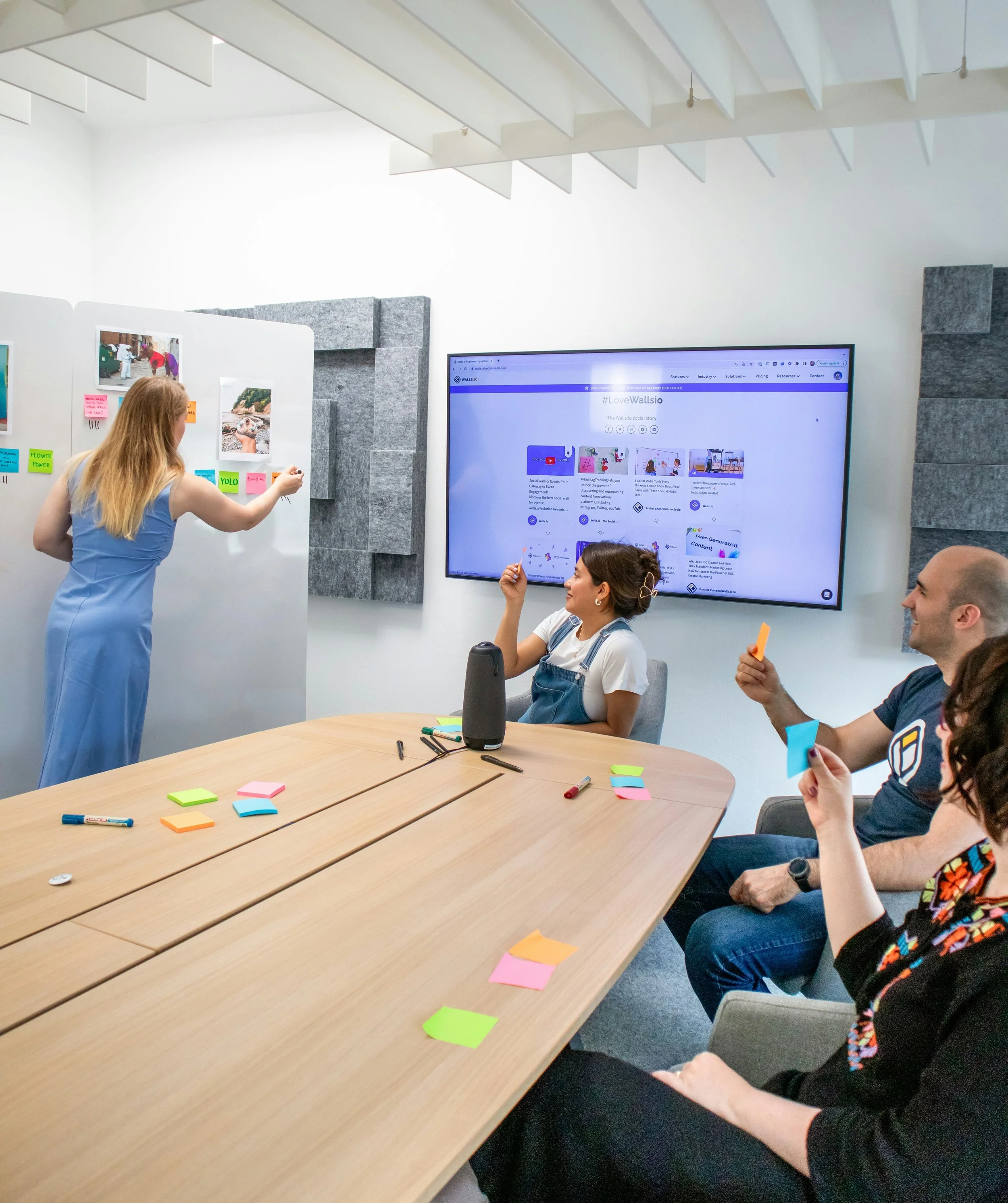
Furthermore, within each group of stakeholders, different values and motivations drive the nuances of application and these should not be dismissed or overlooked. In fact, to get to the shared “YES!”, these must be factored into the work that is being created. (to read more about achieving a shared “YES!” read my blog post Reframing the Challenge)
While some nuances may transfer to different teams, each group is dynamic. Therefore, context and perspectives must be taken into consideration and a ‘cookie cutter’ approach for programming rarely guarantees success. There is no perfect formula or rule for success and what worked for one community may not work for another. Likewise, what worked for a community in the past, may not be what works for them in the present. As such, systems thinking is a must when dealing with complex problems.
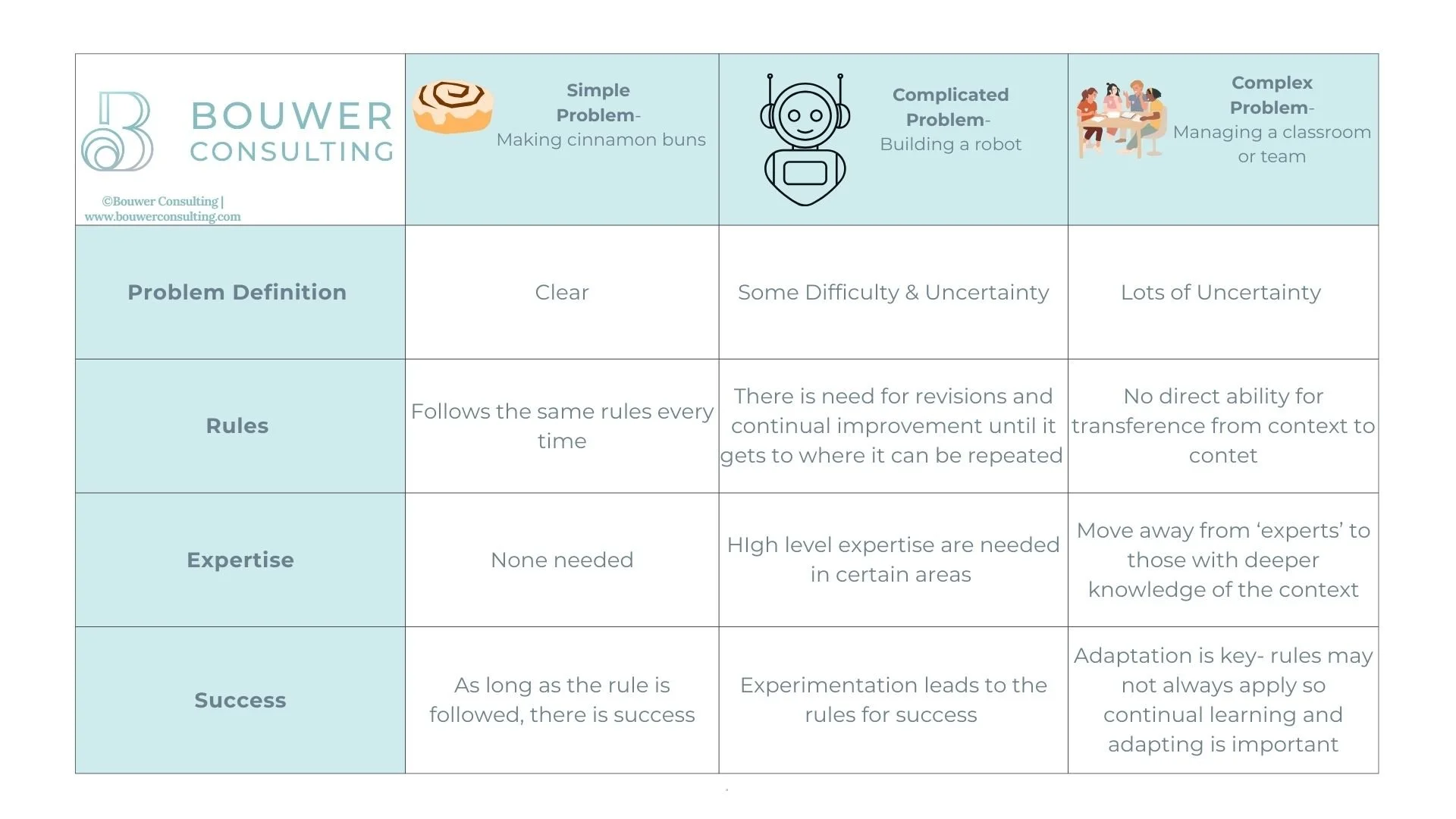
Categorizing types of problems
Benefits for Systems Thinking
Whether you are an NPO working in community development, a curriculum coordinator in a school, or an established organization facing an internal challenge, understanding the type of problem you are seeking a solution for is key. After identifying the type of problem, you can determine what is the best type of thinking method to use. Often, the more complex the problem, the more you need to have a Systems Thinking approach. The beauty of Systems Thinking is that it is not only applicable, but beneficial, across industries and teams.
Some of the benefits for using Systems Thinking include:
Holistic problem solving is encouraged - It encourages seeing situations from an interconnected perspective and to look at the bigger picture. The perspective of interconnectivity encourages individuals and organizations to not just focus on the problem in front of them, but to dig deeper to identify and address the root cause of the problem. As a result, often the solutions are not only tenable, but sustainable, even after key people may leave a project.
Identify Interconnectivity- Once we understand the interconnectivity and interdependence that takes place, we are able to begin to coordinate resources, manpower, and solutions in a more collaborative way. As a result, there is a greater impact on situations or challenges that we are addressing.
Anticipating Unintended Consequences- Often when we use linear thinking to address a complex problem, it tugs on multiple strings and sets off a chain reaction that we weren’t anticipating. When we use systems thinking, we can often anticipate what the ripple impact might be and plan accordingly.
Improved Decision Making- When we begin to consider all the systems that are connected to the situation that we are seeking a solution to, we are able to make more informed decisions as we now have a larger, broader picture, more resources at our disposal, and can anticipate potential ripples that may occur.
Final Thoughts …
Once we are able to identify the type of problem we are facing, we are much better at being equipped at creating a solution that ultimately leads to success. While linear thinking may offer straightforward solutions in certain contexts, it often falls short when addressing the intricacies of complex environments. Systems thinking, on the other hand, provides a holistic perspective that recognizes the interconnectedness of various elements, paving the way for sustainable and innovative solutions.
Are you or your team experiencing challenges that are more complicated or complex?
We can facilitate systems thinking to help you develop sustainable solutions tailored to your unique context. Contact us today!
