
#22: Designing for Transfer: Backwards Design, Systems Thinking, and the Power of Mapping
“A mind map though is actually so much more than a brainstorming tool. It’s where Systems Thinking and Backwards Design begin to work together.”
RESOURCE RECOMMENDATION:
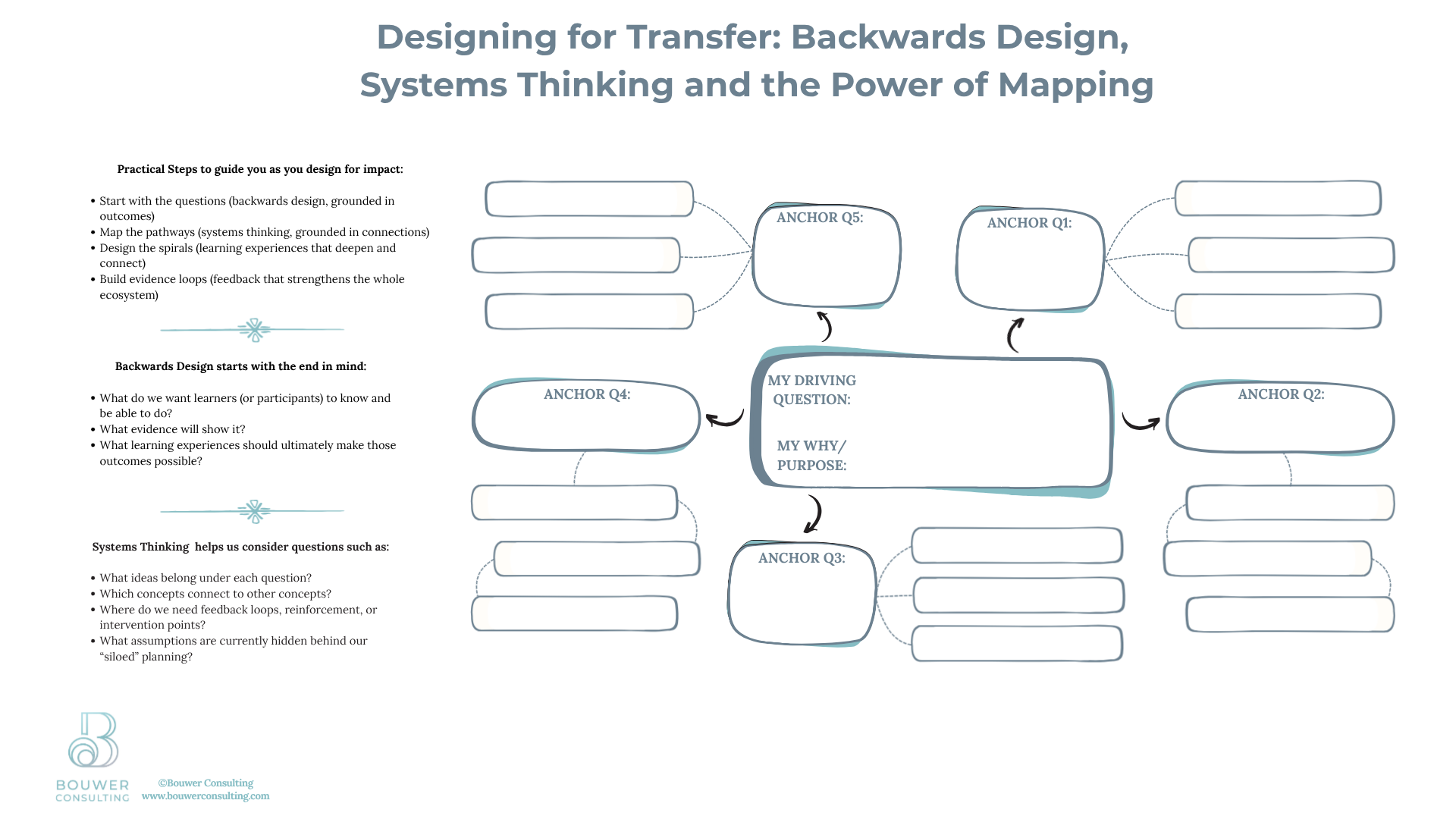
Synopsis: There are multiple ways to create a mind map and there is not one ‘correct’ way of mapping out your ideas.
Download our free PDF to get you started as you build for impact.
In many roles that I take on, I’m often asked if I am willing to help guide new programs and curriculum in their development. One question that I often start with is:
What if the fastest way to strengthen your curriculum wasn’t starting with units—but starting with a map of the questions your system needs to answer?
This is a great starting point as it encourages teams to return to their “WHY” and start the conversation around purpose. This is crucial as it helps ensure that everyone is on the same page and coming to a shared understanding of the direction that they are moving in.
Unfortunately, I often see this step skipped over, with time constraints cited as a key reason. Many educators and administrators have shared that while they recognize the value these conversations can bring, time is limited and there is a reluctance to spend it on something that might not be a tangible action item or show an immediate result.

However, if at the beginning teams don’t take time to address the “WHY”, identify questions that individual systems need to answer from the start, and develop clear goals, it often leads to confusion, misunderstanding, misalignment, and potential fragmentation down the road.
The Power of a Visual

#22: Designing for Transfer: Backwards Design, Systems Thinking, and the Power of Mapping
After clarifying the purpose and goals, one of my favorite tools for guiding program and curriculum development is to create a mind map. For many, they may see a mind map as a simple vehicle, one of hundreds of possible ways to get to the end goal .
A mind map though is actually so much more than a brainstorming tool. It’s where Systems Thinking and Backwards Design begin to work together.
A mind map though is actually so much more than a brainstorming tool. It’s where Systems Thinking and Backwards Design begin to work together. Since it's visual, a mind map is helpful to make sense of and explain complex situations. It also helps highlight connections and frequently reveals new insights that may not have been considered previously.
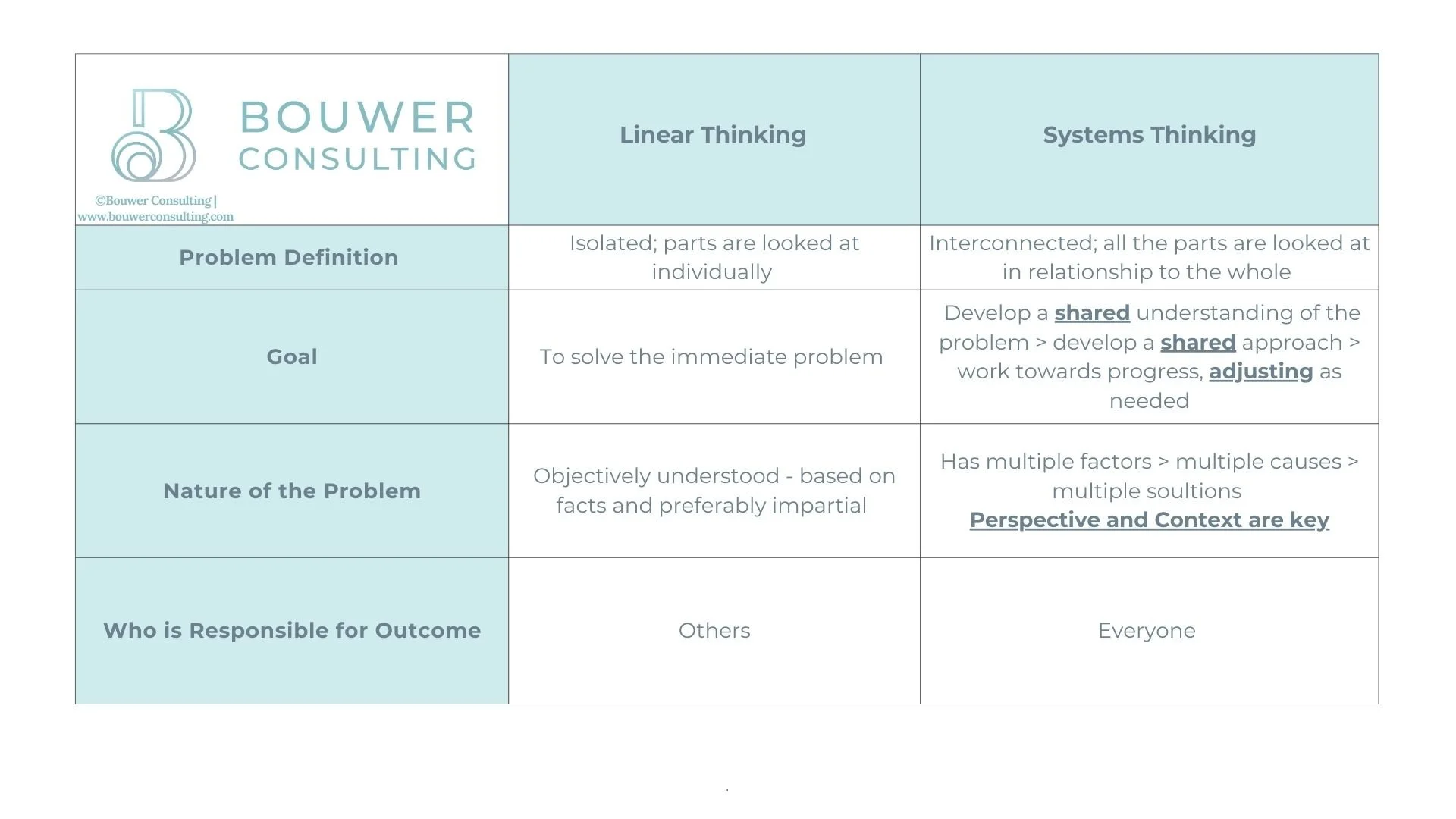
Mind mapping helps us move away from Linear Thinking to using Systems Thinking
THE VALUE OF BACKWARDS DESIGN
As I’ve shared in previous posts, Backwards Design/ Planning gives you the destination—and the questions that define it.
Backwards Design starts with the end in mind:
What do we want learners (or participants) to know and be able to do?
What evidence will show it?
What learning experiences should ultimately make those outcomes possible?
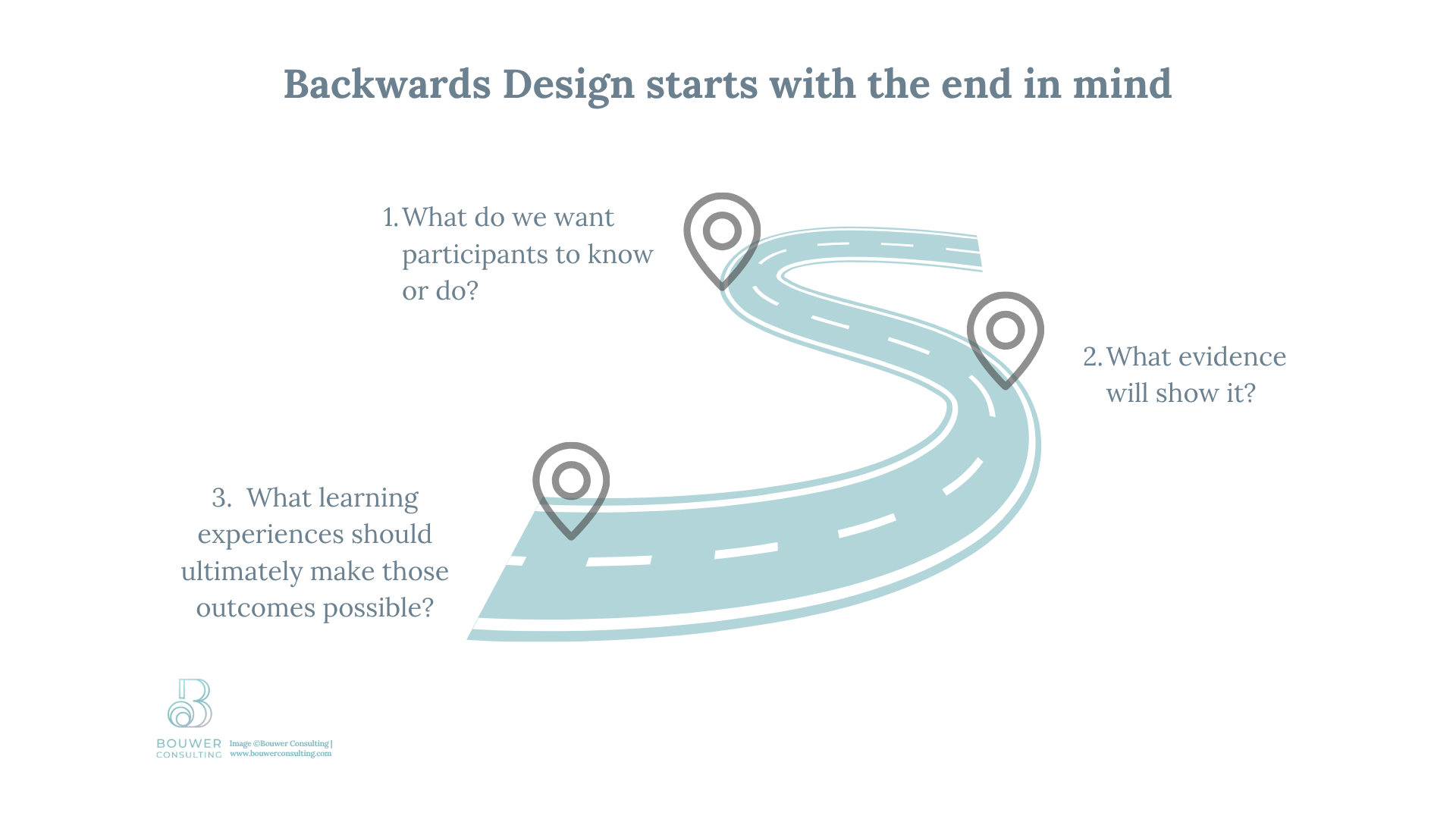
In practice, the most useful “first step” is often identifying the key questions we are seeking to answer as we think about our “Why” and purpose for a specific program or unit of study.
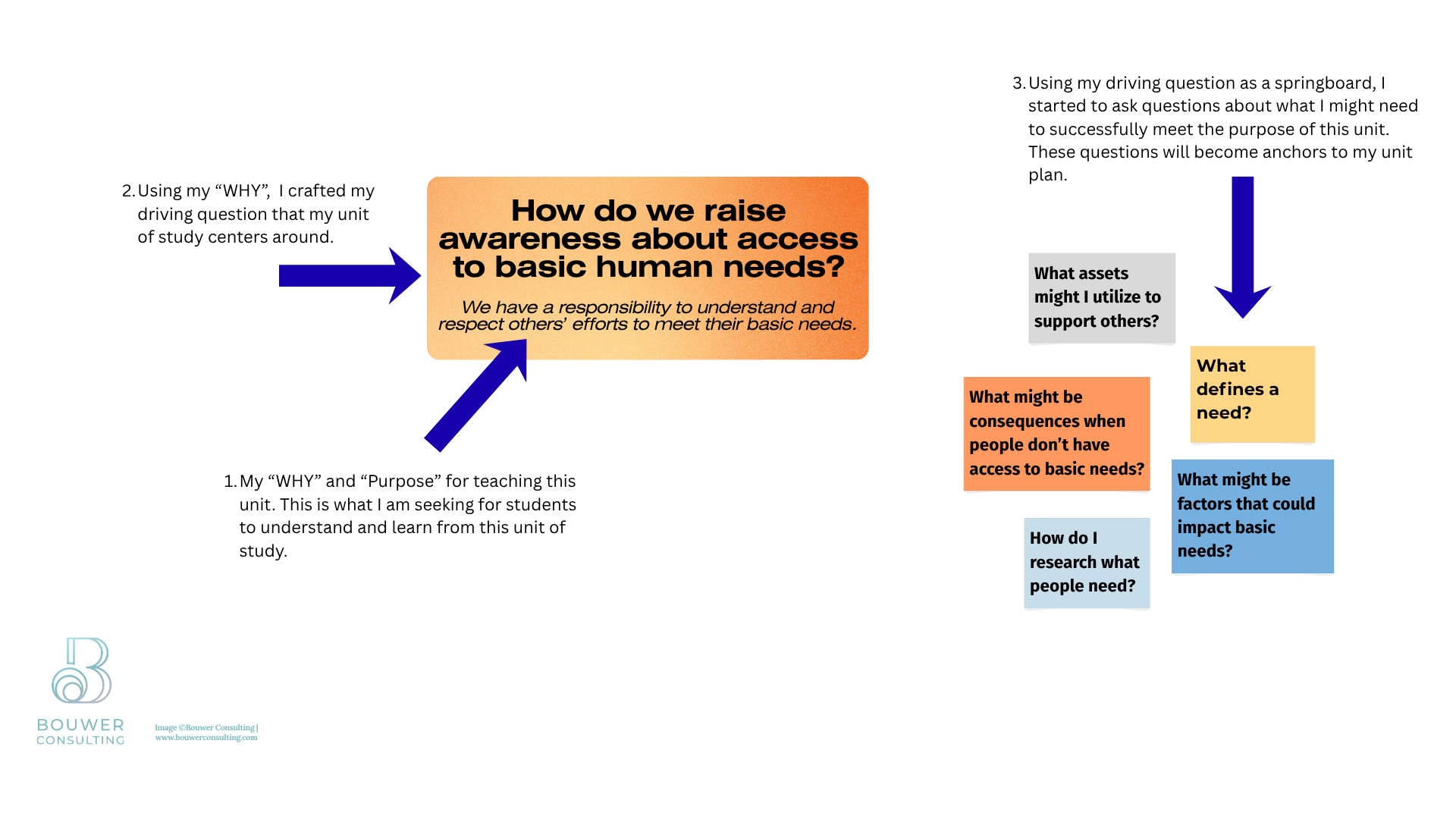
(click image for downloadable view)
The questions that are identified, then become anchors for the program/ curriculum mind map—each one representing a pathway the system could build toward.
Systems thinking helps you see the pathways between the anchors.
Added Value to the Process- Systems Thinking
Once the key questions are clear, the mind map supports Systems Thinking by helping teams ask:
What ideas belong under each question?
Which concepts connect to other concepts?
Where do we need feedback loops, reinforcement, or intervention points?
What assumptions are currently hidden behind our “siloed” planning?
Instead of treating curriculum components as separate boxes, the mind map helps teams recognize that concepts and experiences are interconnected ecosystems—and the impact comes from how those connections function, not just from what’s included.
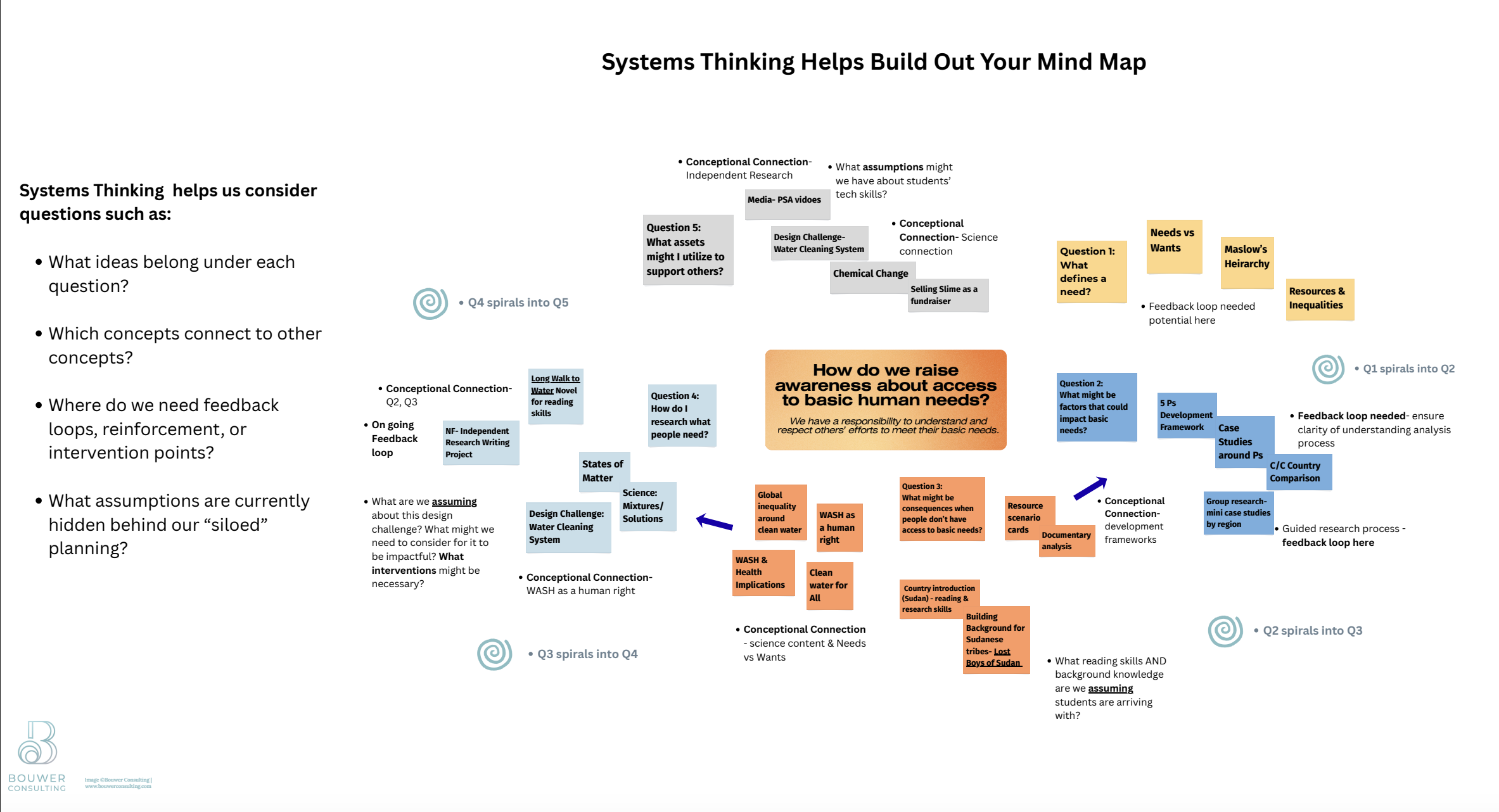
An example of a team mind map and ideas that were generated during discussion during this unit plan.
(click image for downloadable view)
So, why do I rely on mind mapping when I help guide program and curriculum development?
Because it allows us to “spiral” learning and use our “zoom in / zoom out” lens.
So many of the concepts that we choose are intentionally selected to go deeper- so they can spiral into one another. That spiraling structure encourages a “zoom in, zoom out” approach:
Zoom in: learners explore ideas through curiosity and personal connection—making meaning as they go.
Zoom out: learners build an understanding of complex systems—seeing patterns, relationships, and how elements influence one another.
This is where the two design approaches truly complement each other:
Backwards Design ensures the spiral isn’t random—it stays aligned to outcomes and evidence.
Systems Thinking ensures the spiral has coherence—it reflects how learning develops in connected, real-world patterns.
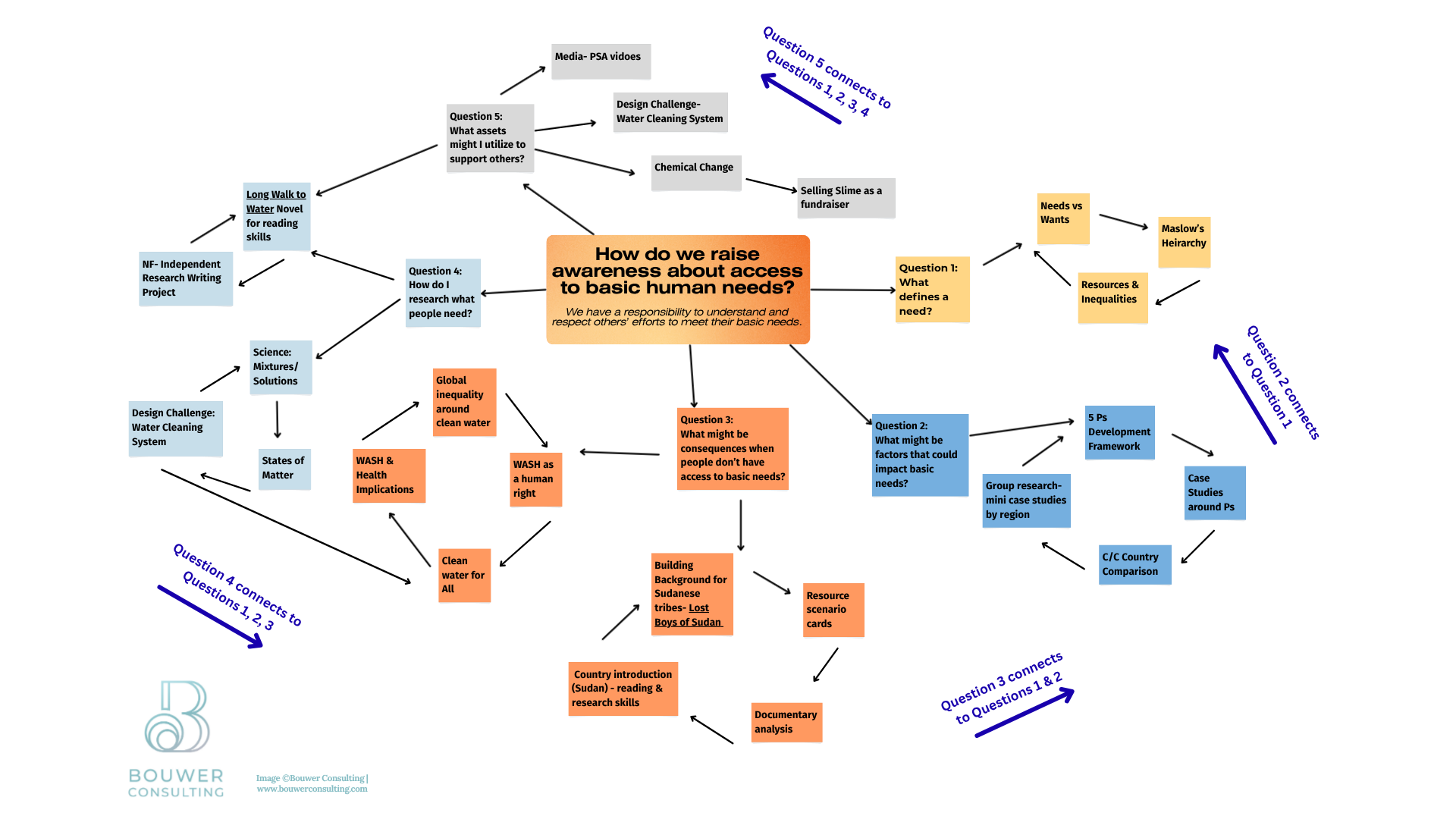
(click image for downloadable view)
Final Thoughts…
Whether you’re in a classroom, building a multi-site program, or designing a learning journey inside an NPO, the mind map is a practical bridge between the two approaches.
It turns planning from a linear checklist into a system:
Start with the questions (backwards design, grounded in outcomes)
Map the pathways (systems thinking, grounded in connections)
Design the spirals (learning experiences that deepen and connect)
Build evidence loops (feedback that strengthens the whole ecosystem)
If you or your team are seeking to develop a new program or refine an existing curriculum, reach out and contact me- I’d love to be a part of your process! To learn more about what we can do, visit “Our Offerings” or schedule a free, 30 minute introduction call.
