#21: Designing for Impact, Not Activity: Backwards Design Through a Systems Lens
“Instead of treating content in isolation, it’s critical to see programs and subject areas as interconnected ecosystems that compliment and build on one another.”
RESOURCE RECOMMENDATION:
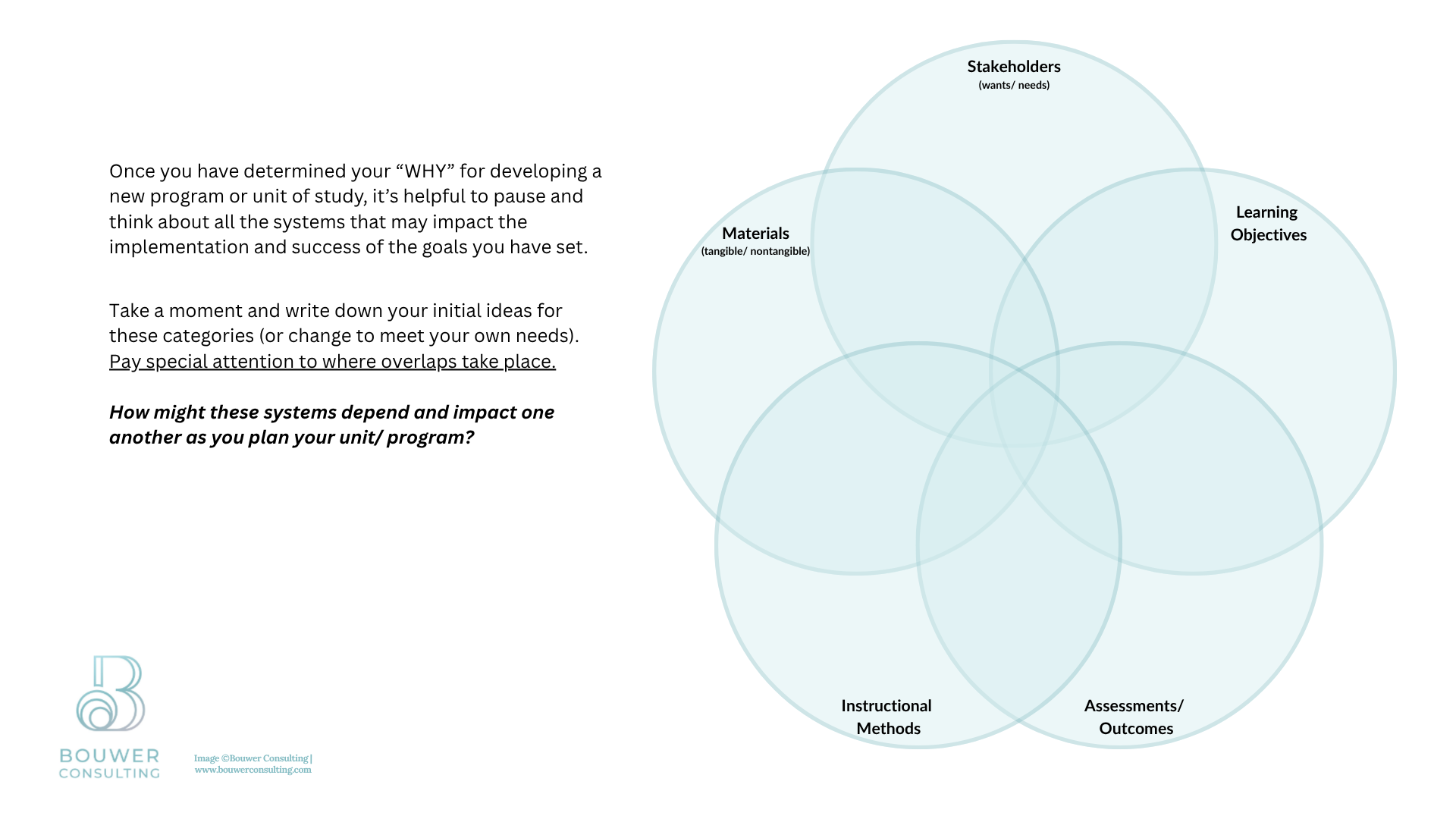
Synopsis: When planning a new program or unit of study, it is important to take time to reflect on the different domains and systems that impact implementation. Below is a Free PDF Worksheet that can help guide your reflection as you consider:
“How might these systems depend on and impact the implementation and success for the goals you have set?”
Years ago I taught a humanities course in middle school. Generally the first several minutes of class as I would take roll, I would move between tables chatting with students about whatever they deemed important to share. That day, as I approached one table, a student let out an audible sigh.
Asking if everything was alright, his reply was something such as, “I bought three notebooks and I just don’t know what notebook I should be using for this class. I’m trying to stay organized but I can’t figure it out. Some things could fit under grammar& writing, others could be related to reading, but then there’s the history. When I try to separate it, I realize it can’t really be separated because they all impact each other. It’s like everything is somehow all connected without me realizing it. ”

As these were middle schoolers, everyone within hearing range had an opinion to chime in with. The general consensus was that the thinking style in this class was one where no topic or skill was actually considered ‘stand alone’. Somehow, there seemed to be an invisible thread that I had mysteriously used to weave everything together so that anything taught was relevant and connected as one thus making multiple notebooks futile - one would suffice for this class.
Another way to define what this student was trying to articulate was his awareness of the interconnectedness that systems thinking creates.
Systems Thinking, Found All Around Us
The beauty in using a Systems Thinking framework is that it can be used at a micro and macro level, in a variety of contexts. Previously, I have shared about systems thinking from a variety of perspectives. A few of those posts are:
Theoretical - The Difference Between Linear vs Systems Thinking (post 17)
Theoretical - Identifying Types of Problems We Are Seeking to Resolve (post 18)
Organizational Management- Identifying & Meeting Larger Organization Needs (post 18, 19)
Organizational Management- Developing Collaborative Teams (post 19, 20)
Application- A Case Study for Integrated Sustainable Practices (post 16)

#21: Designing for Impact, Not Activity: Backwards Design Through a Systems Lens
Once you begin to practice systems thinking, and see it in action, it becomes hard to ‘unsee’. However, to develop that lens, it takes intentional practice.
Within an educational setting, whether it is K-12, Higher Ed, or with a program that an NPO is crafting to deliver, systems thinking is key for developing curriculum and new programs. Once that has been woven into the program and curriculum conception, it can then feed into the active teaching practices used with students and program participants.
Intentionality in Building
Developing the lens for systems thinking starts with the approach to curriculum development. Instead of treating content in isolation, it’s critical to see programs and subject areas as interconnected ecosystems that compliment and build on one another.
When developing a unit of study or new program there are multiple moving parts or systems to be aware of- learning objectives, outcomes, assessments, the stakeholders and their individual needs, instructional methods, materials, etc. A key element in designing programs and curriculum is maintaining perspective on the relationship between these parts - how they depend, interact, and work together is crucial.
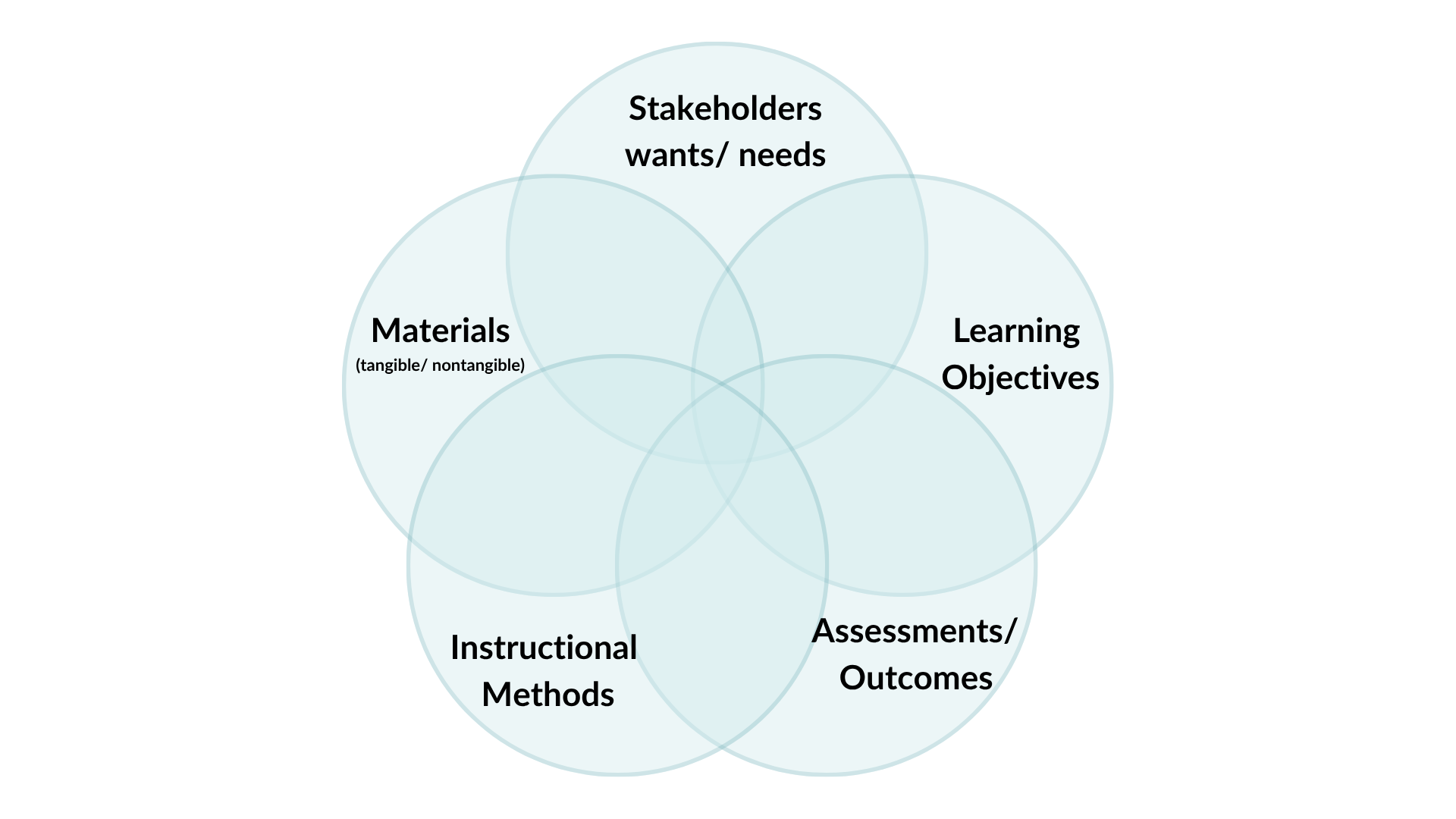
Therefore, from the very inception of the concept to be as impactful as possible, it’s important to move away from linear, stand alone thinking to a more complex problem solving approach. This is where Backwards Design / Backwards Planning compliments Systems Thinking.
Stage 1: Identifying the End Goals & What Success Looks Like
Bringing Systems Thinking down to a micro level for an individual course or program, the first step is to not only identify what is the objective or end goal that is being sought, but also identify the “WHY” behind the objective or goals desired.
Taking time to wrestle with the “WHY” and go beyond the often quick response such as ‘the state/ donor/ test requires it’ is crucial because it not only impacts what the purpose is, but also impacts what success looks like if these goals were achieved.

Personally, I am a huge advocate for inquiry and purposeful engagement. From my experience, some of the best ways to demonstrate and teach systems thinking is for students or program participants to be actively involved in intentional project-based learning where they are using real life situations, case studies, real problems, etc to unpack their thinking and bring together an interdisciplinary approach to the learning process. Therefore, as end goals and the “WHY” are thought about, these are things that I often keep in the back of my mind as I consider what success might look like.
Stage 2: Mind Mapping Concepts
When I work individually on developing a new curriculum or with individuals who are revising units of study or developing new programs, the next step is to begin to create a mindmap.
The starting point begins by identifying the key questions we are seeking to answer and ideas that may fall under each of those questions of pathways that we could potentially move towards.
Often, many of the concepts selected to go deeper into are chosen so they can spiral into one another. This encourages a ‘zoom in, zoom out’ approach which encourages curiosity through personal connections, while at the same time cultivating an understanding of complex systems.
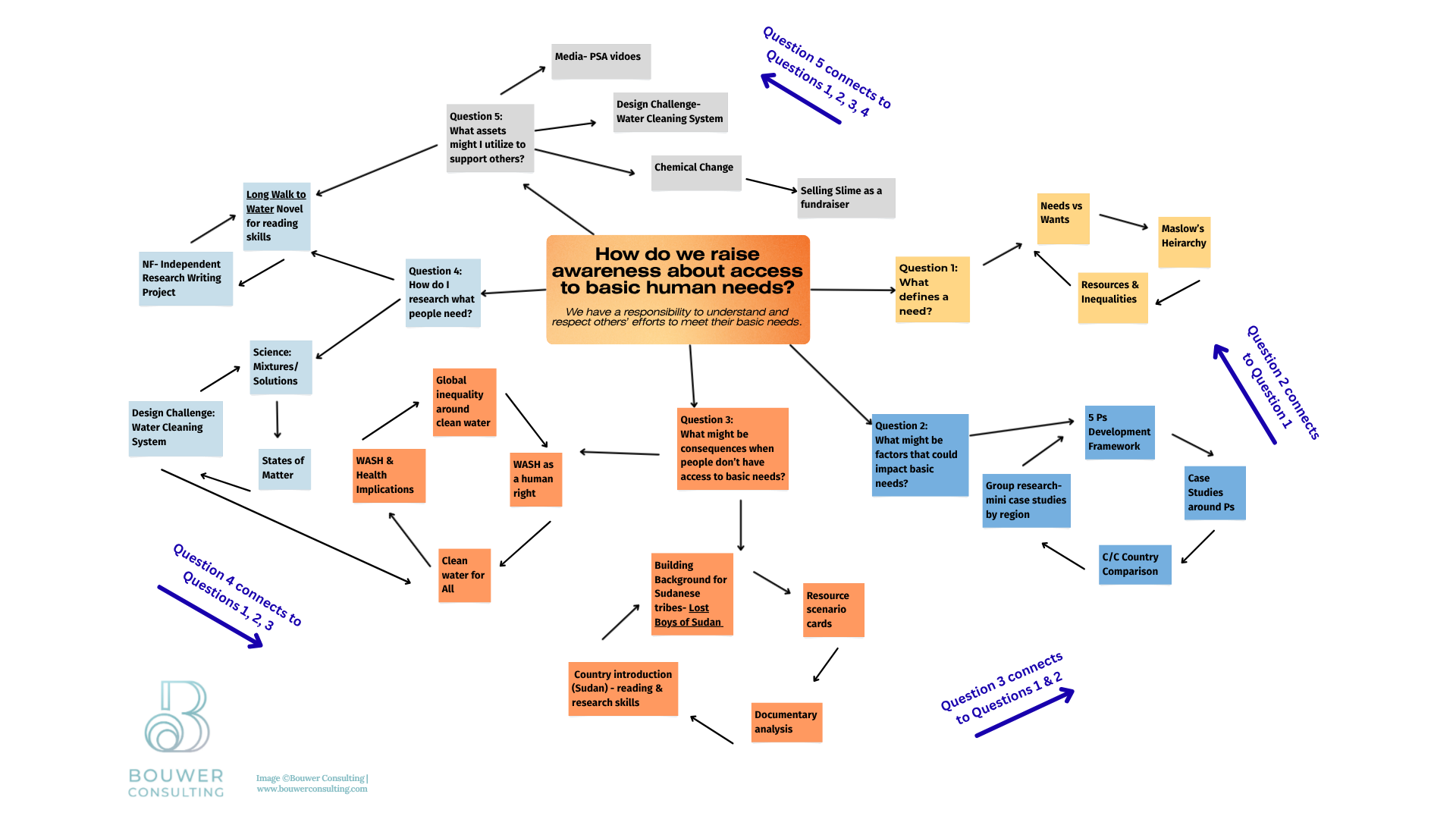
The above image is an example of a mind map for an interdisciplinary unit of study that I guided in development. The main “WHY” was placed at the center, with guiding questions following on the outside. Each guiding question creates a system. Yet, each system connects to one another and relies on one another in order to reach the desired outcomes.
Stage 3: Identifying the Skills Needed
Once concepts are decided on, it’s time to consider the broader skills/ knowledge necessary to meet the objectives set. These skills and knowledge are often used as a scaffold and frequently come from different domains.
It’s important to consider what prior skills are necessary to build on, while at the same time considering the new skills and knowledge that will be taught.

Stage 4: Identifying How to Assess & Measure Outcomes
What the outcomes look like and how they are measured connects back to the initial “WHY”. Therefore, the evidence used to measure outcome correlates to the purpose of the unit of study or program being designed. Consequently, assessments and measurements vary, but the key point is that they should connect back to the objectives that you are seeking to cover.

Stage 5: Developing the Learning Process
Once you have identified how you plan on assessing, development of the learning process can begin. Just like legos encouraged hours of imaginative building, it’s important to keep in mind that every learning activity developed should be connected as you move through this creative process. By building on one another, each learning experience should move towards the objectives that have been laid out from the beginning.

Stage 6: Feedback & Reflection
Often overlooked, this stage is just as important as the start. Taking time for reflection allows practitioners to determine whether the ‘Why’ that guided the process has been answered.
By taking what has been learned through the process, analyzing it, and then applying the lessons gained (feedback loop), practices that guide the curriculum and program development process become stronger.
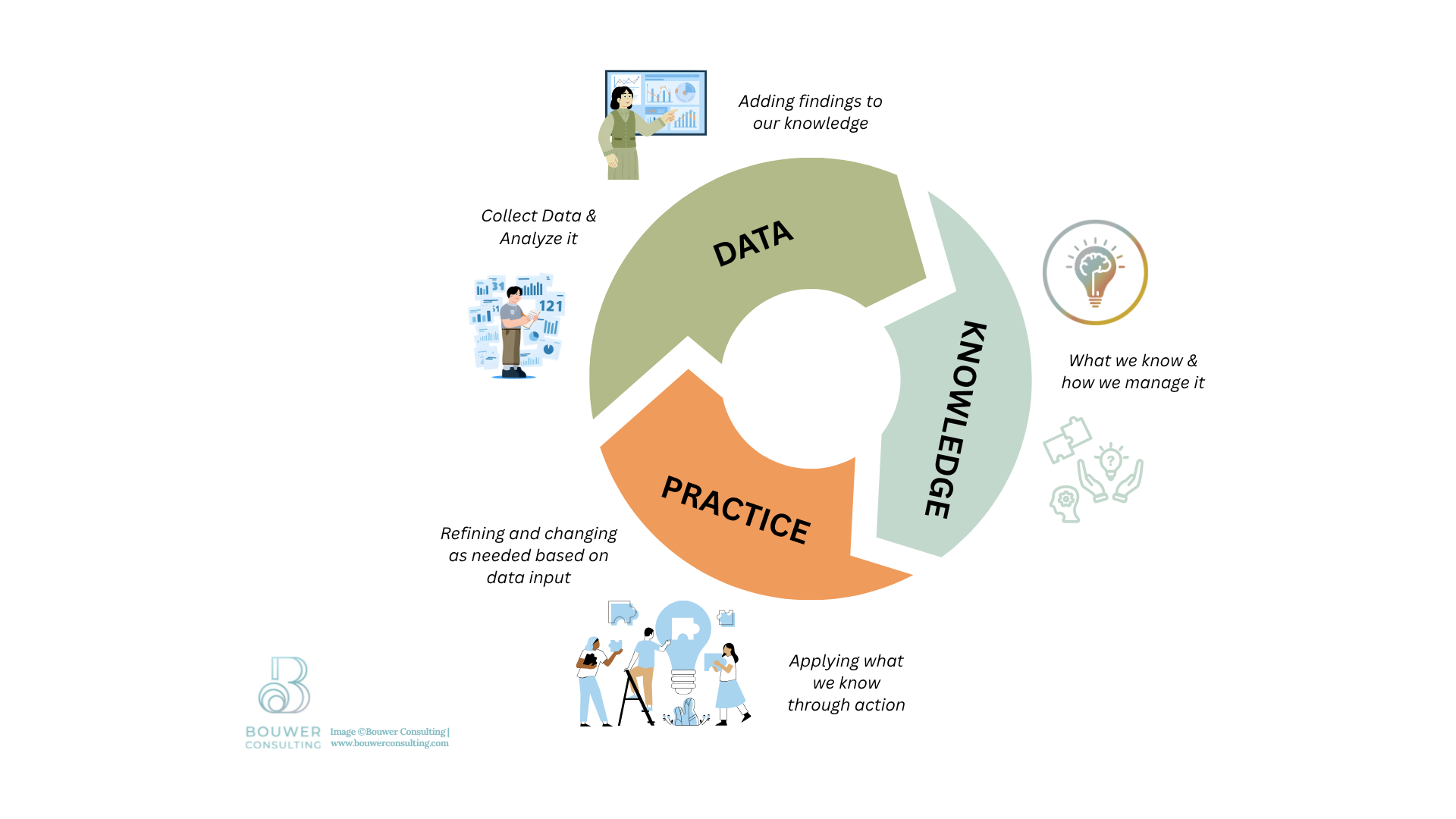
To visually see how all of these stages work together in tandem, read our blog post: Designing with Intent.
Final Thoughts…
Too often we approach our programs and curriculums through a siloed perspective. If we are willing to break through the silos, and recognize that they are interconnected ecosystems that compliment and build on one another, we will often find that the impact we desire can be be made even stronger.
If you or your team are seeking to develop a new program or refine an existing curriculum, reach out and contact me- I’d love to be a part of your process! To learn more about what we can do, visit “Our Offerings” or schedule a free, 30 minute introduction call.
